
The Quiet Stigma Around Adult Illiteracy
The Quiet Stigma Around Adult Illiteracy
One of the least discussed social issues in modern society is adult illiteracy. In countries where smartphones, online banking, job portals, and digital forms are part of everyday life, people often assume that everyone can read well enough to navigate the world. But many adults live with limited reading skills, and because the stigma is so intense, they often go to great lengths to hide it. The result is a problem that stays largely invisible, even though it affects work, health, finances, confidence, and participation in society.
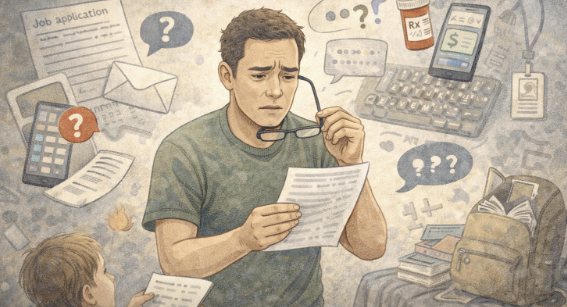
Adult illiteracy does not always mean a person cannot read at all. More often, it means someone struggles to read confidently, understand complex instructions, fill out forms, or process written information quickly. A person may memorize routes, rely on others to read important mail, avoid situations that require paperwork, or pretend they forgot their glasses when asked to read something aloud. These coping strategies can be so polished that even close friends, coworkers, and family members may not realize what is happening.
The consequences can be serious. In the workplace, limited literacy can block access to better-paying jobs, training programs, and promotions. In healthcare, it can make prescription labels, appointment instructions, and consent forms difficult to understand. In daily life, it can turn ordinary tasks such as reading a lease, comparing prices, helping a child with homework, or applying for benefits into stressful obstacles. Illiteracy is not just an educational issue from childhood that somehow lingered. It becomes a lifelong barrier unless society treats it as something adults deserve help with, not shame for.
Part of what makes the issue so persistent is the way society talks about reading. Literacy is often treated as a basic skill everyone “should already have,” which means adults who struggle with it are made to feel defective or embarrassed. Instead of seeing literacy as something that can be improved at any stage of life, people frame it as a test of intelligence or worth. That stigma discourages adults from seeking support, especially when they have already spent years protecting themselves from humiliation.
The digital age has made the problem both easier to hide and harder to escape. Voice notes, GPS, video instructions, and autofill tools can help people get by. At the same time, so many essential systems now depend on reading: online applications, workplace software, school communications, and public services. As life becomes more text-heavy in hidden ways, adults with limited literacy can become even more excluded while appearing “fine” on the surface.
Addressing this issue requires more than just offering classes. It requires changing the cultural attitude around literacy itself. Adult education programs should be accessible, affordable, flexible, and free of judgment. Employers, schools, libraries, and community centers can all play a role in making help feel normal rather than humiliating. Most importantly, we need to stop confusing a lack of opportunity with a lack of ability.
Adult illiteracy is not a personal failure. It is often the result of unequal schooling, poverty, language barriers, disability, or life circumstances that interrupted learning. A fair society would not ask people to hide that struggle in silence. It would make it easier to learn, easier to ask for help, and easier to live with dignity while doing so.