
The Asia-Pacific and The Race to the Critical Minerals
The Asia-Pacific and The Race to the Critical Minerals
The phenomenon of the increasing significance of critical minerals is one of the most significant economic events in the Asia-Pacific nowadays. These include lithium, nickel, cobalt, rare earth elements and copper which are the crucial minerals used in electric vehicles, batteries, solar panels, semiconductors and other high-tech applications. These materials are in high demand as the world transitions to a cleaner energy and more digital environment. This has rendered the Asia-Pacific region to be a central actor in one of the most strategic economic rivalry of twenty first century.
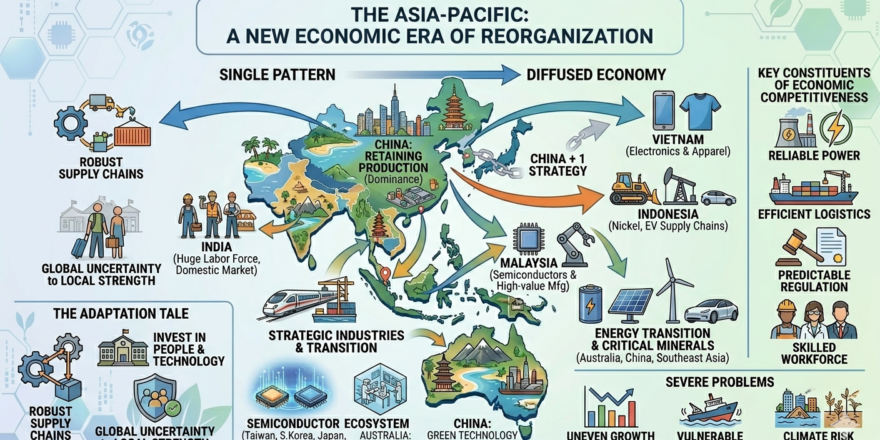
The region is important as it is also home to the largest countries of raw materials as well as the strongest manufacturing hubs in the world. Australia is a leading producer of lithium and other minerals. It has brought particular significance to Indonesia due to its large nickel reserves that play an essential role in numerous technologies of batteries. China controls a large portion of processing and refining of multiple needed minerals, giving it tremendous control in the control of global supply chains. In the meantime other nations like Japan, South Korea and others including growingly India are busy integrating in the manufacturing sector where such materials are converted to produce battery, electronic and vehicle components.
This growth is providing new growth opportunities, but posing some pertinent policy questions, which this mineral economy is developing. Exporting raw materials is not sufficient anymore to many governments. They desire to take it a notch higher and establish domestic refining, processing and manufacturing sectors. Indonesia has been another example in attempting to promote the growth of industry activities within the country by restricting exports of raw nickel and forcing some investment in down stream manufacturing. The bigger picture is to seize greater value, generate more skilled jobs, and lessen reliance on foreign processing chains.
Concurrently, there are risks associated with the critical minerals boom. One is excessive reliance on international price fluctuations. Excessive dependence on exports of minerals without the development of alternative industrial infrastructure can lead to dependence on such countries at the mercy of the latest changes in demand and prices. The other issue is the environmental pressure. Unless well managed, mining, refining, and heavy industrial projects may produce pollution, overuse of water resources and cause tension among the local population. The balancing act between governments is thus a fine one; governments desire a rapid industrial development, however, they require the environment to be regulated, consultation with communities and long term planning.
A layer of complexities is being added by geopolitics. The United States, Japan, and the European Union countries are seeking more diversified and safe critical mineral supply chains. They are aiming at lessening reliance on single country processing systems, and establishing alliances with reliable suppliers in the Asia-Pacific. This enhances strategic significance of many regional economies. The countries which are resource exporters no longer remain as mineral rich countries, they are becoming key players in the world energy transition process and are becoming an important player in the politics of economic security.
In the case of the Asia-Pacific, this offers an uncommon opportunity to mold upcoming world economy. The area can leverage its natural resources, industrial strength, and geographic location to be at the center of green development and hi-tech production. Not only geology will assure success. It will entail intelligent industrial policy, investment in infrastructure and skill, environment-friendliness, and the capability to convert raw-material advantage into a wider economic growth.
Critical mineral race is thus more than just a mining process. It is a question of who will have ownership of the technologies, industries and supply chains of the future. The Asia-Pacific is not left behind in that race. It is in the middle.
GUOYANG (GARY) ZHENG