
Can Nano-hydroxyapatite Chewing Gum Actually Repair Teeth?
Can Nano-hydroxyapatite Chewing Gum
Actually Repair Teeth?
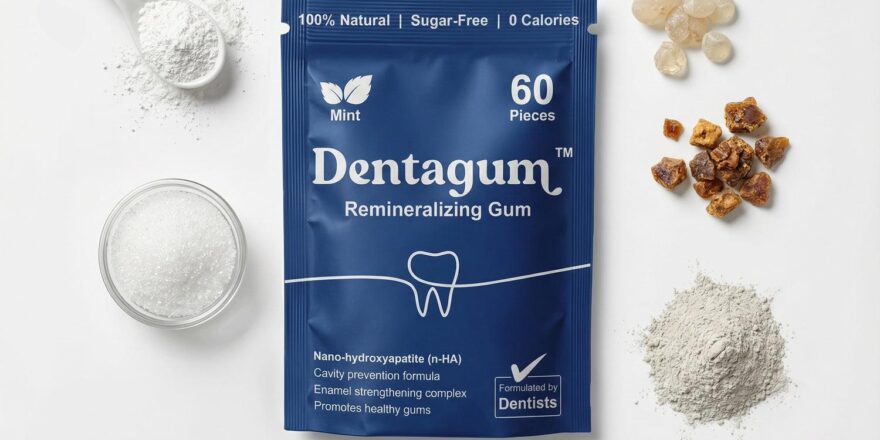
Throughout my life, I have experienced many cavities, regularly visiting the dentist to clean and apply fluoride varnish to my teeth and receiving a reminder each time on the importance of brushing and flossing. While doing research for a school project, I came across an ad for this product that interested me particularly as a mint and gum lover: nano-hydroxyapatite chewing gum.
Hydroxyapatite (HA), commonly written as Ca10 (PO4)6(OH)2, is a natural mineral critical to human bones and teeth. A human tooth is made of four main types of tissue consisting of minerals, organic matter and water. The very outer layer, enamel, is structured by densely packed hydroxyapatite crystals, underneath which is the dentin layer that makes up the vast majority of a tooth. Then hard bone like layer cementum, and in the center the soft living tissue layer pulp. Nano-hydroxyapatite (nHA) is a nanoscale form of the mineral hydroxyapatite. nHA has been used as an ingredient in toothpaste since the late 1900s in Japan, spreading to Europe in the early 2000s and slowly gaining popularity in the U.S.. Another natural mineral commonly known and used for dental products is fluoride. Fluoride, along with additive ingredients in toothpastes, blocks dental pores temporarily. While nano-hydroxyapatite rebuilds missing tooth structure by reducing the size of the pores and makes the tooth naturally white by rebuilding the enamel.
Theoretically, nHA fills into dental tubules and aids teeth in mineralizing areas. In the United States, nano-hydroxyapatite can be used in dental products, but products marketed with therapeutic claims, such as preventing cavities, are subject to drug regulations because it has yet to be approved as an anti-cavity agent by the FDA.
The word “nano” often raises safety questions, with many expressing disapproval of the use of nanoparticles, while other professionals disprove this statement and some even promote it.
Although there seems to be enough proof online that says that nano-hydroxyapatite in chewing gum would work to some extent, because of my lack of in depth knowledge in the topic and how it would be applied in gum I am unable to give a firm response to this question.
Bella Ziyuan Wang